
Reviewed · WORKSHOPS
Taipei Calligraphy Workshop (DIY incl.)
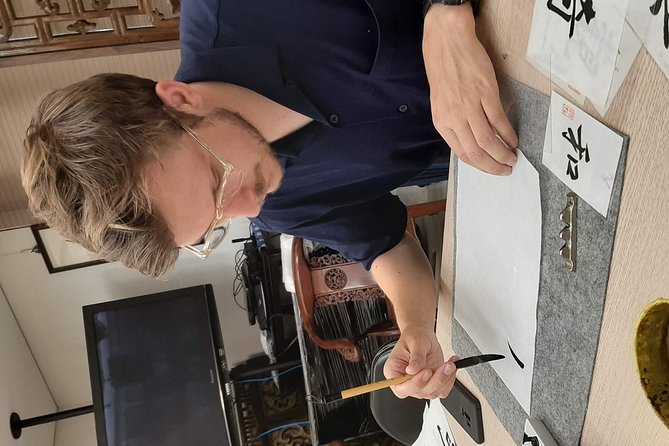
The best part of this Taipei workshop is that you do not simply watch someone write beautiful characters. You pick up the brush yourself, learn why each stroke matters, and leave with your own calligraphic work. The class begins with the story of Chinese calligraphy, then moves quickly into practice.
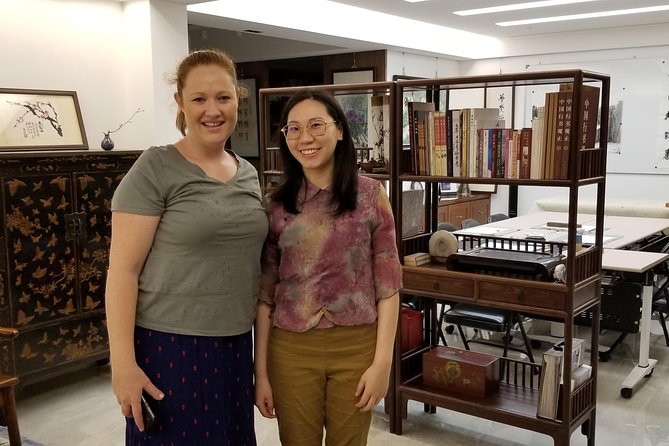
I like the six-person limit, which gives you room to ask questions and receive direct help. I also like the setting, described as a welcoming room filled with Chinese paintings, calligraphy, and traditional objects. Tea, patient teaching, and a relaxed pace make this a good choice for a rainy afternoon or a quieter break from Taipei sightseeing.
The main consideration is time. Two hours is enough for a thoughtful introduction and a finished piece, but not enough to master the art. At $79 per person, the value depends on how much you want personal instruction and a cultural activity rather than a quick souvenir class.
Key points to know before you book
- Small groups of six or fewer: You get hands-on help instead of watching from the back of a crowded room.
- A real introduction to Chinese calligraphy: The class covers the art’s long development and several writing styles before you practice.
- Beginner-friendly brush instruction: You learn how to hold and control the brush even with no previous experience.
- A finished piece to take home: Your artwork becomes both a souvenir and a reminder of your time in Taipei.
- A calm cultural setting: Tea, paintings, calligraphy, and artefacts give the class a quiet, traditional feel.
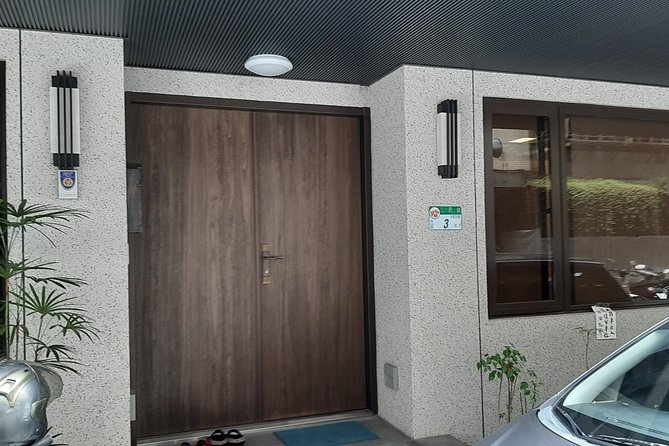
- Easy city access: The meeting point is near public transportation in Da’an District, at No. 16, Lane 151, Section 2, Jianguo South Road.
Why a brush class can be a better Taipei souvenir
Taipei offers plenty of things to buy, but a piece of paper you make yourself carries a different kind of memory. You remember the awkward first strokes, the feel of the brush, and the moment a character begins to look intentional.
This workshop treats calligraphy as both an art and a practice in concentration. You are not expected to arrive artistic or fluent in Chinese. The focus is on basic control, patience, and understanding how the brush creates different marks on paper.
I think this matters because Chinese calligraphy can look intimidating in a museum. At the National Palace Museum, for example, you may admire the flowing lines without knowing what the artist did to create them. A short class gives you a useful visual key: pressure, direction, spacing, and rhythm become easier to notice.
The class also gives you a cultural lesson without requiring a full day. If you have already visited temples, museums, or historic streets, this activity adds context through practice rather than more sightseeing.
A few more Taipei trips worth a look
- Xiao Long Bao, Beef Noodles & Boba Tea Cooking Class in Taipei
★ 5.0 · 159 reviews - Xiao Long Bao, Chicken vermicelli with mushroom and sesame oil, Tofu strips salad, Bubble milk tea. Taiwan Traditional Delicacies Experience-A (Taipei Cooking Class)
★ 5.0 · 79 reviews - Taipei Cooking Class & Market Adventure in Historic Dadaocheng
★ 5.0 · 77 reviews
Arriving in Da’an District
You make your own way to the classroom at No. 16, Lane 151, Section 2, Jianguo South Road, in Da’an District. The activity is near public transportation, and the location has been described as easy to reach by transit.
I would allow a little extra time to find the lane and settle in. The experience ends at the same meeting point, so you do not need to arrange a separate ride afterward. Private transportation is not included, but that should not be a major issue for most people comfortable using Taipei’s public transport system.
The address is worth saving before you leave your hotel. Mobile tickets are accepted, and booking confirmation arrives at the time of booking. Those are small details, but they help when you are fitting a two-hour class between museum visits, meals, or an evening plan.
The first lesson: where Chinese calligraphy comes from
The workshop begins with an introduction to Chinese calligraphy and its development over thousands of years. You learn that calligraphy is not just a way to write words neatly. It is also a visual art built from movement, balance, and control.
The class covers different styles of Chinese writing. The precise styles taught can depend on the instructor and the group, but the purpose is clear: you see how Chinese characters have changed in appearance and how each style carries a different look.
I find this opening especially useful for beginners. Without context, brush writing can feel like copying mysterious shapes. After hearing about the major forms and seeing examples, you have a better idea of why the lines vary and why a character’s shape needs careful balance.
Some instructors also connect the lesson to the objects in the room. The space has been described as filled with Chinese paintings, calligraphy, and artefacts, which gives you something real to examine while you learn. This is more engaging than a bare classroom with a worksheet on the wall.
Learning to hold and control the brush
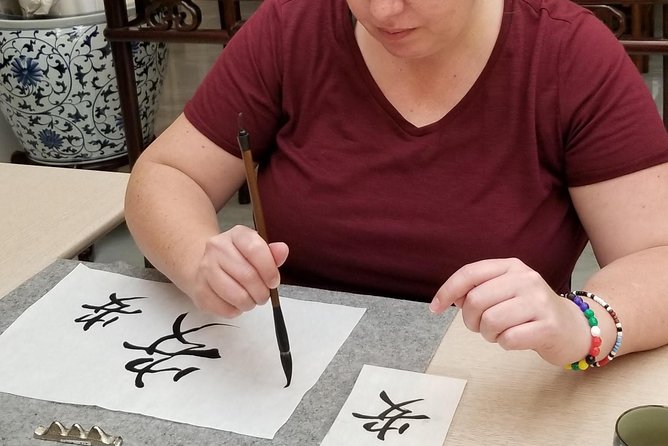
Next comes the practical part. You learn how to hold the brush, manage its movement, and work with basic techniques. This may sound simple, but brush control is where the class becomes genuinely hands-on.
A calligraphy brush responds differently from a pen. The amount of pressure changes the line, and the angle of the brush affects its shape. You practice staying deliberate rather than rushing through a character.
The teaching style appears to be patient and encouraging. Teresa is praised for explaining techniques clearly and working well with complete beginners. Ruby is described as easy to communicate with before the class and calm and informative during it. Ginn has helped participants who already knew some Chinese and wanted to understand the art more fully.
The different instructor names suggest that your teacher may vary by session. That is useful to know when booking, especially if you are hoping for a particular instructor. The consistent point is the teaching approach: clear explanations, patience, and attention to the learner’s interests.
You do not need to be artistic. You also do not need to read Chinese. The class is about using the brush and understanding the form, so it can work for people who know only a few characters as well as those with some Chinese language experience.
Same island, a completely different kind of day:
- From Taipei: Shifen, Jiufen, and Yehliu Guided Day Trip
★ 4.6 · 1,654 reviews - Full-Day Private Custom Taipei City Tour
★ 5.0 · 911 reviews - From Taipei: Yehliu, Jiufen, and Pingxi Day Tour
★ 4.7 · 892 reviews - Taipei: Jiufen Night View and Shifen Day Tour
★ 4.6 · 870 reviews
Practice strokes before making a finished piece
The practice stage gives you a chance to make mistakes without worrying about the final artwork. You work through brush movements and basic writing techniques before trying to produce something suitable to take home.
That order makes sense. If you went straight to a finished character, the pressure to make it perfect could take away from the experience. Instead, you learn by trying, adjusting, and trying again.
The workshop frames the activity as a form of presence and mindfulness. You need to slow down and pay attention to each stroke. I would not book this expecting a formal meditation session, but the quiet concentration can make a welcome change from Taipei’s busy streets.
This is also where a small group matters. With no more than six people, you can show the instructor your grip or ask about a stroke without waiting behind a large class. Personal correction is particularly helpful here because small changes in pressure and movement are hard to understand from a demonstration alone.
Creating your own calligraphy piece
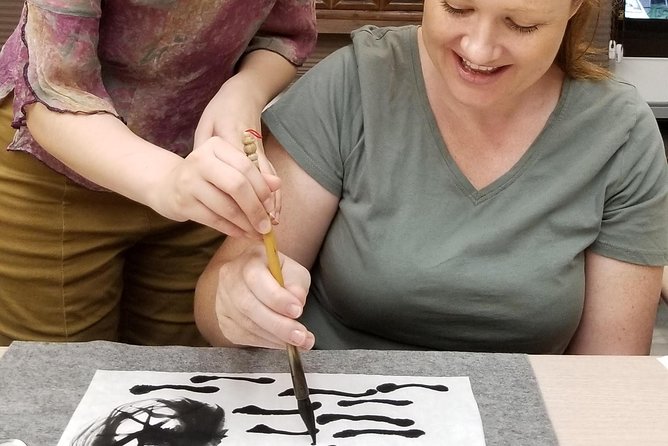
The final stage is your personal work. You put the techniques into practice and create a calligraphic piece to take home. It is presented as a mini masterpiece, but the important point is not perfection. Your finished paper records your first attempt at a traditional art form.
I like this part because it gives the activity a clear ending. You are not only left with general information or a few practice sheets. You have something physical that can travel home with you.
Your results will depend on your patience, the character or design selected, and how much time the class spends on practice. You should expect a beginner’s piece, not museum-quality work. That is part of the charm. The artwork has meaning because you made it during a cultural lesson in Taipei.
If you are taking the class with a partner or friends, the finished pieces can also make a nice shared memory. The workshop is well suited to people who want an activity they can discuss and do together rather than sit side by side watching a demonstration.
Tea, paintings, and the feel of the room
Tea is served during the experience, adding to the calm atmosphere. It is a small touch, but it helps the class feel like a cultural visit rather than a standard craft lesson.
The room’s paintings, calligraphy, and artefacts also matter. They place the practice in a wider setting and give you examples of the art around you. You might find yourself looking more closely at brushwork after you have tried making your own lines.
I would particularly consider this class on a rainy day. The activity takes place indoors, lasts about two hours, and offers a quiet focus when outdoor sightseeing is less appealing. It is also a good afternoon option for anyone who has already seen Taipei’s major attractions and wants something slower.
Do not expect a large museum display or a formal historical lecture. The room supports the lesson, but the main event is still your brush practice.
Is $79 a fair price?
The cost is $79 per person. That is not the cheapest way to spend two hours in Taipei, so you should consider what the fee includes.
You are paying for a small group, an instructor’s time, materials, a guided introduction to calligraphy, tea, and a finished piece to take home. Gratuities are included, which removes the need to calculate an additional tip.
For me, the strongest value comes from the group size. A larger, cheaper workshop might give you the same broad explanation, but it may not provide the same amount of direct help with your brush technique. Here, the maximum of six creates a more personal lesson.
The price is easier to justify if you value cultural activities and want to make something yourself. It is less attractive if you are mainly looking for a low-cost craft souvenir or a quick demonstration.
Group discounts are available, so friends or families should check the booking price for their party. The class is also an efficient use of time: two hours is long enough to learn, practice, and produce a final piece without taking over your entire day.
Who will enjoy this class most?
I would recommend it to first-time visitors who want a practical introduction to Chinese culture. It also suits returning visitors who have already seen the main sights and want a more personal activity.
You are a good match if you:
- Enjoy making things with your hands
- Want a souvenir with a personal story
- Are curious about Chinese writing and art
- Prefer a small class to a large group
- Have some Chinese language knowledge and want cultural context
- Need a relaxed indoor activity in Taipei
Families may also appreciate the clear structure, though the supplied information does not specify a minimum age. Most people can participate, and service animals are allowed.
I would be more cautious if you want advanced instruction. This is a beginner-friendly introduction, not a multi-day course in brushwork. Two hours can give you a strong first taste, but serious improvement would require more practice after you leave.
Timing, access, and cancellation details
The activity lasts approximately two hours and begins and ends at the stated Da’an District meeting point. You arrange your own transportation, but the location is near public transit.
The experience is capped at six people. Confirmation is provided when you book, and a mobile ticket is available. Free cancellation applies when you cancel at least 24 hours before the local start time. Cancellations or changes made within 24 hours are not accepted for a refund.
A minimum number of participants is required. If the class is canceled because that minimum is not met, you can choose another date or experience, or receive a full refund.
These rules are reasonable, but note the 24-hour cut-off if your Taipei plans are still shifting. I would book once you know your schedule rather than treating this as a last-minute option.
My call: book it if you want to make, not just see
I would book the Taipei Calligraphy Workshop if you want a calm, personal cultural activity with a clear result. The six-person format, patient instruction from teachers such as Teresa, Ruby, or Ginn, tea, and a finished piece give the class more substance than a quick souvenir stop.
The $79 price is fair for hands-on instruction, though it is not a bargain activity. You should choose it for the lesson and the experience of working with the brush, not simply for the paper you bring home.
Skip it if you need advanced study, dislike seated craft activities, or want a very cheap way to fill an hour. But if you are curious about Chinese calligraphy, have no experience, and want to understand the art before looking at it in Taipei museums, this is a thoughtful two-hour choice.
FAQ
How long does the Taipei Calligraphy Workshop last?
The workshop lasts approximately two hours. It includes an introduction to Chinese calligraphy, brush practice, technique instruction, and time to make a piece to take home.
Where does the workshop begin and end?
The meeting point is No. 16, Lane 151, Section 2, Jianguo South Road, Da’an District, Taipei City, Taiwan 106. The activity ends back at the same meeting point.
How many people can join the class?
The maximum group size is six people. This allows for hands-on instruction and individual questions during brush practice.
Do I need previous calligraphy experience?
No. The workshop is designed for beginners and teaches how to use and manage the brush, along with basic techniques. Most people can participate.
Is transportation included?
No. Private transportation is not included. You make your own way to the meeting point, which is near public transportation.
Can I cancel for a full refund?
Yes, if you cancel at least 24 hours before the experience start time. Cancellations or changes made less than 24 hours in advance are not accepted for a refund.
Just added around Taipei
- Iconic Food Tour: Local Street Food, Drinks & Sites★ 4.4 · 3 reviews
- Keelung: Heping Island Geopark Entry Ticket★ 5.0 · 3 reviews
- Best of Taiwan 9 Days Tour★ 3.5 · 3 reviews
- One-way Private Transfer between Jiufen and Taipei★ 5.0 · 3 reviews
- Keelung Shore Excursion: Private 6H Natural Wonder & Seafood Tour★ 5.0 · 3 reviews
- Private Taichung Instagram Day Tour from Taipei★ 5.0 · 3 reviews
- Full Day Private History Tour in Taipei City★ 4.5 · 3 reviews
- From Taipei: Private Classic Taipei Timeless Treasures Tour★ 5.0 · 3 reviews
Workshops, compared.

Xiao Long Bao, Beef Noodles & Boba Tea Cooking Class in Taipei
Read our review →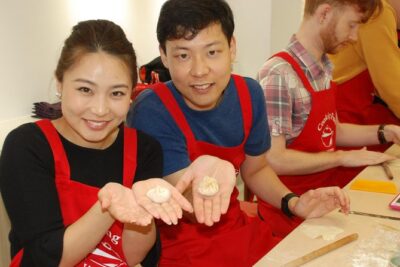
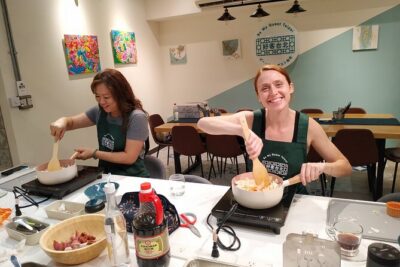
Taipei Cooking Class & Market Adventure in Historic Dadaocheng
Read our review →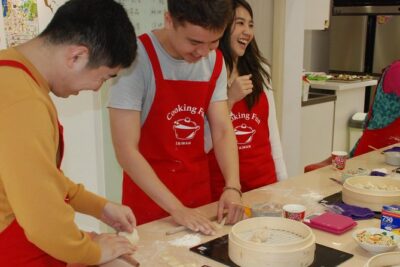
Xiao Long Bao, Pork thick soup, Bubble milk tea. Taiwan Traditional Light Meals Experience-B (Taipei Cooking Class)
Read our review →
Street Food Cooking Class in Taipei : Gua Bao/Lu Rou Fan/Boba Tea
Read our review →

Xiao long bao, Pork thick soup, Bubble milk tea. (Taiwan Cooking Class)-B
Read our review →
Browse the lists this tour appears in