
Reviewed · TAIWANESE COOKING CLASSES
Street Food Cooking Class in Taipei : Gua Bao/Lu Rou Fan/Boba Tea
Taiwanese street food is easy to eat and harder to make well. This class lets you tackle the tricky parts: soft steamed buns, fragrant braised pork, and tapioca pearls made from scratch. You finish by eating the meal you prepared, which gives the afternoon a clear payoff.
I like the small maximum of eight people, since you should get real help rather than watch from the back of a crowded room. I also like the recipe book, a useful souvenir for anyone who wants to recreate the dishes at home. The main consideration is time: two hours gives you a focused introduction, not a full tour of Taiwan’s cooking.
Key points
- Make three Taiwanese favorites: Gua bao, lu rou fan, and bubble milk tea are the main stars.
- Work with dough and pork: You prepare the gua bao buns and learn the basics of braising pork belly.
- Boba takes real effort: Making chewy tapioca pearls from scratch is fun, but it is also the most demanding task.
- Small-group format: The class accepts no more than eight people, allowing more direct guidance.
- A meal is included: You sit down and eat the food made during the session.
- Convenient afternoon timing: Meet at 2:30 p.m. at CookInn Taiwan in Taipei’s Datong District.
Why these Taiwanese small eats matter
Taiwanese food culture has a strong tradition of xiao chi, or small eats. These are not merely snacks grabbed between major meals. They are everyday foods with their own techniques, textures, and familiar flavors.
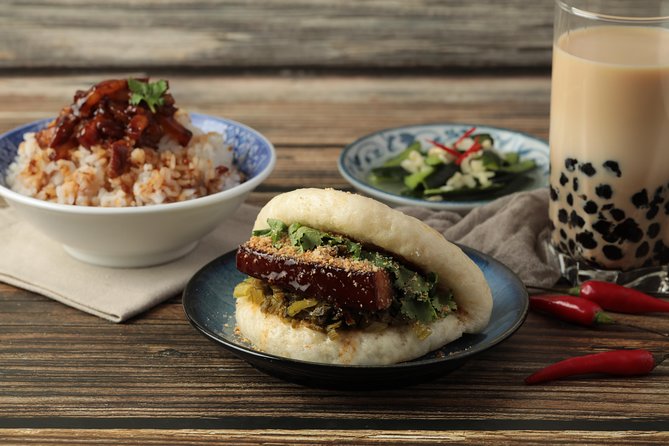
This class focuses on three dishes that show different sides of that tradition. Gua bao is soft and pillowy, with braised pork tucked inside a steamed bun. Lu rou fan pairs rice with richly seasoned pork. Bubble milk tea adds a sweet drink and a hands-on texture challenge.
I like this mix because you are not repeating one cooking method for two hours. You handle dough, meat, rice, and tapioca. The result is a useful snapshot of Taiwanese comfort food, even though the session cannot cover the whole cuisine.
More cooking classes in Taipei:
- Xiao Long Bao, Beef Noodles & Boba Tea Cooking Class in Taipei
★ 5.0 · 159 reviews - Xiao Long Bao, Chicken vermicelli with mushroom and sesame oil, Tofu strips salad, Bubble milk tea. Taiwan Traditional Delicacies Experience-A (Taipei Cooking Class)
★ 5.0 · 79 reviews - Taipei Cooking Class & Market Adventure in Historic Dadaocheng
★ 5.0 · 77 reviews
Starting at CookInn Taiwan at 2:30 p.m.
The meeting point is CookInn Taiwan’s Zhongshan classroom at 66 Section 1, Chengde Road, second floor, in Taipei’s Datong District. The activity starts at 2:30 p.m. and ends back at the same place.
That fixed meeting point keeps the afternoon simple. You do not need to chase a guide through several neighborhoods or keep checking your watch for the next stop. You arrive, settle into the classroom, and concentrate on the food.
The location is in the Datong District, while the classroom is identified as the Zhongshan teaching venue. Check the address carefully before setting out, especially if you are relying on a phone map. The mobile ticket is handy, and confirmation is sent at booking.
Making gua bao from the dough up
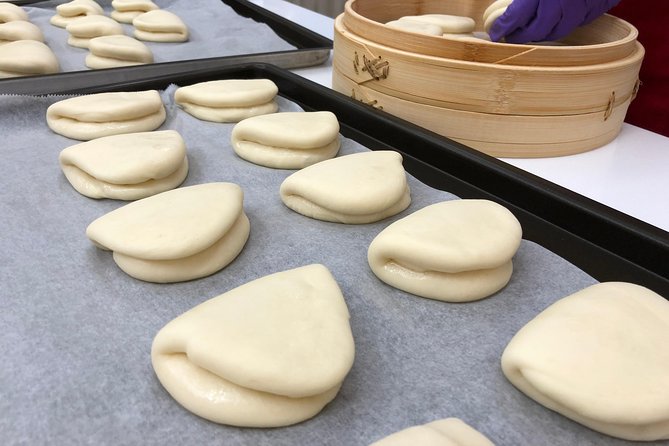
Gua bao is often called a Taiwanese hamburger, though the comparison only goes so far. Instead of a split bun, it uses a folded steamed bun with a soft, slightly springy texture.
The class teaches you to make the buns rather than simply handing you finished ones. That is an important part of the experience. Steaming dough looks straightforward, but the final texture depends on getting the dough and cooking process right.
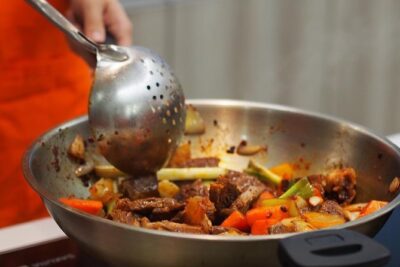
You also learn how to prepare the pork belly that goes inside. The cooking method is braising, which gives the meat time to take on the seasoning and become tender. The precise seasoning details are not specified in advance, so you should expect instruction on the method and flavor balance rather than a fixed list of ingredients before class.
Gua bao is the dish I would most look forward to here. It gives you a clear before-and-after lesson: plain dough becomes a soft bun, and pork belly becomes the savory center. One participant specifically found the gua bao the star of the meal and wanted to make it at home for family.
The hands-on nature also makes this a good choice if you like learning by doing. You are not just taking notes while someone else cooks. You get involved in the steps that define the dish.
Braising pork for lu rou fan
Lu rou fan is one of Taiwan’s classic rice dishes. The idea is simple: seasoned braised pork served over rice. The flavor comes from the slow cooking and the balance of savory, sweet, and aromatic notes.
Here, the class teaches the pork-braising technique. The rice is prepared as part of the meal, though one account of the class describes the rice as already cooked while the pork is made during the session. That means you should not expect to spend the full class preparing every part from raw ingredients.
This is not a drawback for most people. A two-hour course needs to keep moving, and braising can take time. Preparing the pork while using ready rice lets you focus on the technique that gives lu rou fan its character.
The dish also adds contrast to the gua bao. You learn how similar pork can work in two different formats: tucked into a bun for a handheld snack, then served over rice as a fuller bowl. If you want recipes you can repeat at home, this is likely the more practical everyday dish.
Still, gua bao receives the strongest praise, so set your expectations accordingly. Lu rou fan is an important part of the meal, but the steamed bun is likely to be the memorable project.
A few more Taipei trips worth a look
- Xiao Long Bao & Boba Tea Cooking Class in Taipei
★ 5.0 · 28 reviews - Xiao Long Bao, Pork thick soup, Bubble milk tea. Taiwan Traditional Light Meals Experience-B (Taipei Cooking Class)
★ 5.0 · 24 reviews - Taiwanese Gourmet Cooking Class in Taipei
★ 5.0 · 18 reviews - Xiao long bao, Pork thick soup, Bubble milk tea. (Taiwan Cooking Class)-B
★ 5.0 · 18 reviews
Turning tapioca into bubble tea
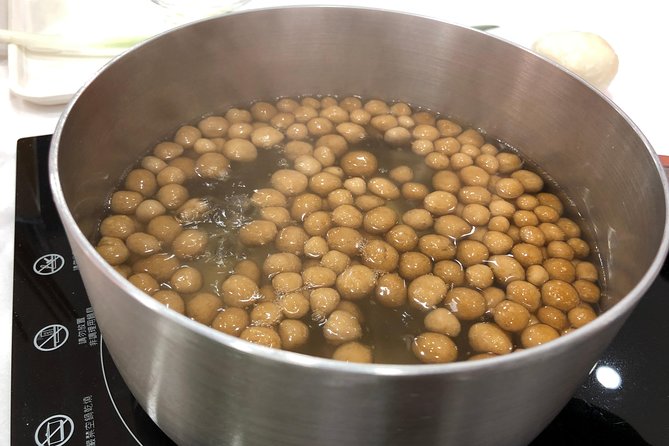
Bubble milk tea is Taiwan’s best-known drink export, and this class treats it as more than a ready-made beverage. You make the chewy tapioca pearls from scratch, then shake your own cup of bubble milk tea.
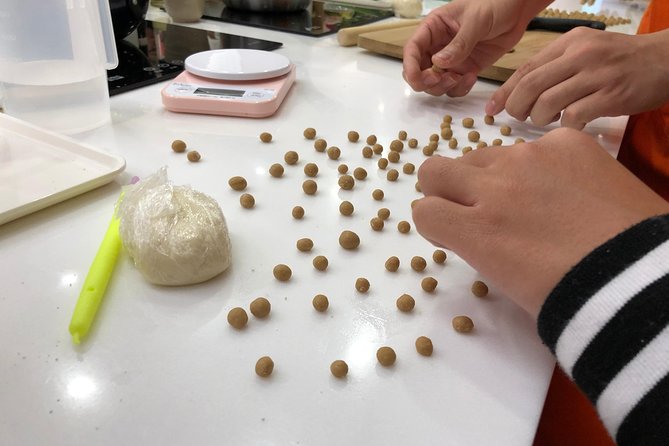
This is the most unusual part of the class for many people. The pearls need the right texture, and one participant described the process as surprisingly difficult. That difficulty is useful. It shows why the boba in a finished drink has such a distinct chew and why small changes in preparation matter.
The process also breaks up the savory cooking. After working with buns and pork, you switch to a sweet drink with a different texture and rhythm. You get a drink to enjoy with the meal, but you also learn a technique that is not usually visible when you buy bubble tea from a shop.
Do not expect this to be effortless. If your pearls do not come out perfectly, that is part of the lesson. The class is a practical introduction, not a factory production line. You shake the drink yourself, which gives the final step a little theater without turning the experience into a simple demonstration.
A two-hour class with room for questions
The session lasts about two hours. That is long enough to cover the three main projects while short enough to fit neatly into a Taipei afternoon.
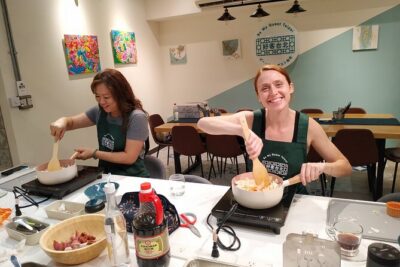
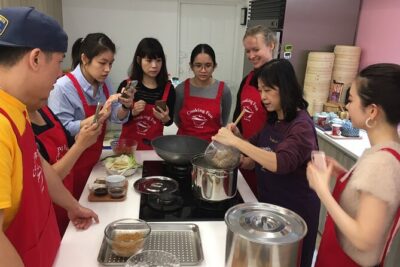
The group size matters here. With a maximum of eight people, the instructor can watch your technique and answer questions as you work. This is especially useful for dough and tapioca, where a small mistake can affect the final texture.
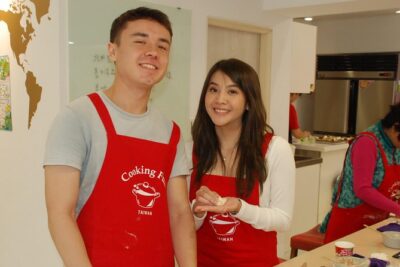
The class has also worked well for families. One instructor, Angela, was described as patient with children aged 8, 10, and 11, and involved them in the cooking. That makes the course a reasonable option for families with older children who can follow directions and enjoy practical tasks.
You should still remember that this is a cooking class, not a passive food tasting. You will need to listen, handle ingredients, and take part in the preparation. If you want to eat several street foods without doing any work, a food tour would suit you better.
The meal at the end
The meal is the reward for the work. You sit down at the end and eat the gua bao, pork dish, and bubble tea you prepared.
That final meal gives the class a stronger sense of purpose than a short cooking demonstration. You can taste the results while the steps are still fresh in your mind. If something seems too salty, too soft, or not chewy enough, you can connect that result to what you did in the kitchen.
The food has also been described as delicious, with the gua bao receiving the most enthusiastic response. The class should leave you full enough to count as a proper meal, but the exact portion size is not specified. Come hungry, as the experience itself advises.
A recipe book is provided as a souvenir. I consider that a real advantage. Food memories fade quickly, but a written recipe can bring the afternoon back to your own kitchen. You will have a better chance of repeating the dishes if you note any instructor tips beside the printed recipes.
What the $79 price gets you
At $79 per person, this is not the cheapest way to eat Taiwanese food. Taipei has plenty of inexpensive street food, and you could sample several dishes for far less.
You are paying for something different: instruction, hands-on preparation, a small group, and a meal at the end. The value is strongest if you want to understand how gua bao, braised pork, and boba are made rather than simply taste them.
The price also makes more sense if you plan to use the recipes later. The recipe book adds lasting value, especially if you enjoy cooking at home. A person who treats this as a one-time meal may find it costly. Someone who wants a practical food activity and a skill to take home may find it fair.
The group limit of eight is another part of the value. A cheaper class with a large group could offer less individual help. Here, the small format should make it easier to ask questions and get corrections during the difficult steps.
Who will enjoy this class most
I would choose this for several types of visitors:
- Food lovers who want more than a list of dishes and flavors.
- Home cooks who want recipes and techniques they can try after Taipei.
- Families with older children, since the class has successfully involved children aged 8, 10, and 11.
- Couples and small groups looking for a shared afternoon activity.
- First-time visitors to Taiwan who want a direct introduction to familiar local foods.
It is less suitable if you dislike group instruction, do not want to handle food, or prefer a flexible afternoon with no fixed schedule. It may also disappoint anyone expecting a full survey of Taiwanese cuisine. The focus is narrow by design: a few well-known small eats, taught in detail.
Practical details before you book
The activity begins at 2:30 p.m. and returns to the meeting point. Plan around the full two-hour session rather than assuming you can leave early.
Your confirmation arrives when you book, and the mobile ticket makes check-in easier. The class requires a minimum number of participants. If that minimum is not reached and the activity is canceled, you are offered another date or experience, or a full refund.
You can cancel for a full refund up to 24 hours before the start time. Cancellations or changes made inside that 24-hour window are not accepted for a refund. The deadline follows Taipei local time, so check the clock carefully if you are booking from another time zone.
Should you book the CookInn Taiwan class?
Book it if you want to understand three Taiwanese favorites by making them yourself. The strongest reasons are the small group, the useful recipe book, the homemade boba, and the chance to eat your own gua bao and braised pork at the end.
The main tradeoff is price. At $79, you are buying instruction and an activity, not just lunch. If you want a low-cost taste of Taipei, eat at a market instead. If you want a friendly, focused cooking session with a good chance to learn something you can repeat at home, this is a solid choice.
FAQ
Where does the cooking class meet?
The class meets at CookInn Taiwan’s Zhongshan classroom, at 66 Section 1, Chengde Road, second floor, in Taipei’s Datong District.
What time does the class start?
The class starts at 2:30 p.m.
How long does the experience last?
The cooking class lasts approximately two hours.
What dishes do you make?
You make gua bao, braised pork for lu rou fan, and bubble milk tea. The class also includes making the tapioca pearls from scratch.
Do you eat the food you prepare?
Yes. The activity ends with you sitting down to enjoy the meal you made.
How many people can join the class?
The class has a maximum of eight people.
Is the class suitable for children?
The class has involved children aged 8, 10, and 11 in the cooking, with the instructor helping them take part.
Is a recipe book included?
Yes. A recipe book is provided as a souvenir.
Can I cancel for a refund?
You can cancel at least 24 hours before the start time for a full refund. Cancellations or changes made less than 24 hours before the start time are not accepted for a refund.
More Food in Taipei
- Taipei Hidden Eats, Market & Street Food Tour with 8+ Tastings
★ 5.0 · 109 reviews - Taipei Food Tour: Night Market & Convenience Store(Food Included)
★ 4.5 · 100 reviews - Traditional Old School Taiwanese Food Tour
★ 5.0 · 36 reviews - Taipei Street Food & Night Market Tour with a Local: Private & Custom
★ 4.5 · 35 reviews
More Food & Drink in Taipei
- The Award-Winning Private Food Tour of Taipei: The 10 Tastings
★ 5.0 · 716 reviews - Taipei: Food Tours w/ Top 10 Taiwan Food (Breakfast/Dinner)
★ 4.7 · 517 reviews - Taipei: Private Food Tour – 10 Tastings with Locals
★ 4.9 · 218 reviews - Taipei: Street Food & Hidden Eats Night Market Food Tour
★ 4.8 · 112 reviews
Just added around Taipei
- Best of Taiwan 9 Days Tour★ 3.5 · 3 reviews
- Iconic Food Tour: Local Street Food, Drinks & Sites★ 4.4 · 3 reviews
- Keelung: Heping Island Geopark Entry Ticket★ 5.0 · 3 reviews
- Keelung Shore Excursion: Private 6H Natural Wonder & Seafood Tour★ 5.0 · 3 reviews
- One-way Private Transfer between Jiufen and Taipei★ 5.0 · 3 reviews
- Private Taichung Instagram Day Tour from Taipei★ 5.0 · 3 reviews
- Full Day Private History Tour in Taipei City★ 4.5 · 3 reviews
- From Taipei: Private Classic Taipei Timeless Treasures Tour★ 5.0 · 3 reviews
Taiwanese Cooking Classes, compared.
Xiao Long Bao, Beef Noodles & Boba Tea Cooking Class in Taipei
Read our review →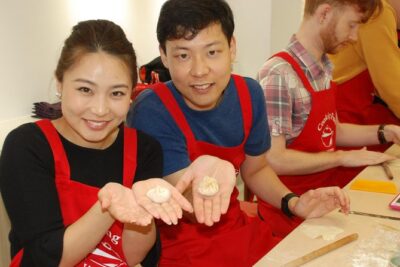
Taipei Cooking Class & Market Adventure in Historic Dadaocheng
Read our review →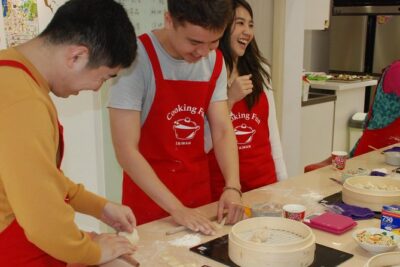
Xiao Long Bao, Pork thick soup, Bubble milk tea. Taiwan Traditional Light Meals Experience-B (Taipei Cooking Class)
Read our review →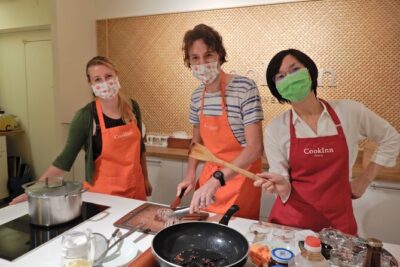
Xiao long bao, Pork thick soup, Bubble milk tea. (Taiwan Cooking Class)-B
Read our review →
Turnip cake, Pork thick soup, Tofu pudding. Taiwan Traditional Light Meals Experience-C (Taipei Cooking Class)
Read our review →Browse the lists this tour appears in