
Reviewed · WALKING TOURS
Taipei Historic Shared Walking Tour
Taipei’s past is easiest to grasp on foot, and this tour links the city’s most important historic sites in one clear route. You move from the incense and local worship of Longshan Temple to the colonial architecture of Ximen Red House, then into the political memory held by 228 Peace Memorial Park and Chiang Kai-shek Memorial Hall.
I like the low $5 price, which makes this an easy first look at Taipei, and I like the way the route connects several eras instead of treating each sight as a separate photo stop. Guides such as Amy, Andy, Mabel, and Pauline have been praised for clear English, lively explanations, and useful answers. The main drawback is simple: three hours on city streets can feel long for young children or anyone who dislikes walking, and larger Saturday groups may be split between guides.
Key things to know before you book
- Six major sights in one west Taipei route: Visit Longshan Temple, Bopiliao Historic Block, Ximen Red House, the Presidential Office Building, 228 Peace Memorial Park, and Chiang Kai-shek Memorial Hall.
- A history-first walk: The route moves from late Qing religious life through Japanese colonial rule and into the political story of the Republic of China after 1949.
- A genuinely cheap introduction: At $5, the tour costs less than many short city walks, though tips for the guide are not included.
- English-speaking local guidance: Past guides have included Amy, Fu, Andy, Susie, Huawen, Luke, Mabel, Eric, and Pauline.
- A manageable but active morning: The walk begins at 10:00 a.m., lasts about three hours, and ends at Liberty Square by Chiang Kai-shek Memorial Hall.
- Best for first-time visitors: You get history, architecture, religion, politics, and practical city context before exploring Taipei on your own.
Why old west Taipei makes such a good classroom
Modern Taipei can feel fast and polished, but its oldest western districts reveal how the city took shape. This tour begins in Wanhua, an area tied to early Chinese immigration and trade, then moves through buildings and public spaces that reflect Japanese rule and the later Nationalist government.
That sequence matters. You are not just collecting six famous sights. You are watching the city change from a Qing-era settlement into a Japanese colonial capital and then into the political center of the Republic of China.
I find this kind of route more useful than a general city walk with no clear theme. The guide can explain why a temple sits where it does, why a European-style park became a site of political trauma, and why a grand memorial hall still prompts debate. You leave with a framework for understanding Taipei, not just a list of places to photograph.
The tour begins at 10:00 a.m. near Like It Formosa at 153, Section 1, Xiyuan Road, in Wanhua District. You should plan to arrive with enough time to find the meeting point. The exact end point is Liberty Square beside Chiang Kai-shek Memorial Hall, at 21 Zhongshan South Road.
A few more Taipei trips worth a look
- Taipei Cooking Class & Market Adventure in Historic Dadaocheng
★ 5.0 · 77 reviews - Taipei’s Origin & Longshan Temple – Taiwan Cultural Tour
★ 4.6 · 19 reviews - Taipei: Cooking Class & Market Adventure Historic Dadaocheng
★ 4.9 · 17 reviews
Longshan Temple: religion at the heart of Wanhua
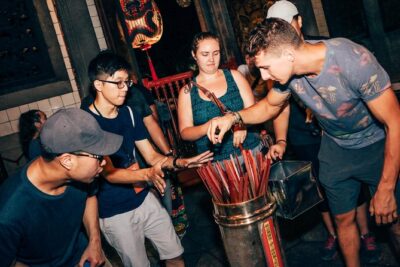
The first stop is Longshan Temple, with about 40 minutes set aside for the visit. Admission is free, and the temple serves as a religious center for the local community.
Longshan was first established in the 18th century by Chinese immigrants who came to Taipei. It helped anchor the settlement that became Monga, one of the city’s oldest districts. That origin gives the temple more meaning than its ornate appearance alone. It represents the arrival of communities that helped turn Taipei from a smaller settlement into an important urban center.
Your guide can place the temple within the traditional beliefs of late Qing society. This is a good early stop because it gives you a sense of how faith, neighborhood life, and migration were connected. The story begins with ordinary people building a religious center, not with government offices or grand monuments.
Allow yourself time to look closely at the details while listening. The tour moves at a group pace, so you will not have unlimited time for quiet observation. Still, 40 minutes is enough for an introduction, especially if this is your first visit to Wanhua.
Bopiliao Historic Block and the old trade routes
A short walk leads to Bopiliao Historic Block, where the tour spends about 30 minutes. The name is often translated as skin-peeling, a reminder that historic place names can preserve old trades and working life.
Bopiliao was once a commercial center in northern Taipei. Chinese immigrants traded here with Indigenous communities, and the street developed around business and movement rather than ceremonial display. That makes it a useful contrast with Longshan Temple.
I like this part of the walk because it helps you picture how the old city worked. Temples provided spiritual focus, while nearby streets handled trade, supplies, and contact between different communities. The preserved buildings also give you a look at the physical character of older Taipei.
Do not expect a large museum experience. This is a compact historic district viewed as part of a walking route. The guide’s explanation supplies much of the value, especially if you want to understand the connection between commerce, immigration, and urban growth.
Ximen Red House and the changing face of Ximending
The next stop is Ximen Red House in Ximending, with about 30 minutes here. The building began as a public market and shows strong Japanese colonial design.
Its later use adds another layer. After World War II and the end of Japanese rule, the Red House became a theater. That shift reflects the way Taipei repeatedly reassigned old spaces as political control, culture, and public taste changed.
Ximending itself offers a sharp change from the quieter historic streets of Wanhua. The tour uses that contrast well. Within a short distance, you move from a traditional religious district to one of Taipei’s best-known entertainment and shopping areas.
The stop works best when you pay attention to both the building and its setting. The Red House is not only an attractive historic structure. It is evidence of Japanese planning, postwar cultural change, and the city’s ability to give old buildings new roles.
Because the stop lasts about half an hour, you should not expect a long independent break in Ximending. If you want extended shopping or food time here, plan to return after the tour.
Same island, a completely different kind of day:
- From Taipei: Shifen, Jiufen, and Yehliu Guided Day Trip
★ 4.6 · 1,654 reviews - Full-Day Private Custom Taipei City Tour
★ 5.0 · 911 reviews - From Taipei: Yehliu, Jiufen, and Pingxi Day Tour
★ 4.7 · 892 reviews - Taipei: Jiufen Night View and Shifen Day Tour
★ 4.6 · 870 reviews
The Presidential Office Building and the legacy of Japanese rule
Only a few steps from Ximending, the route reaches the Presidential Office Building for about 20 minutes. The building was established in 1919 and originally designed to house the Office of the Governor-General of Taiwan during Japanese colonial rule.
This is one of the clearest places to see how political power leaves a mark on a city. The building was created for Japan’s colonial administration, but it later became the political center of Taiwan. Its role changed, while its position in the city remained important.
The stop is relatively brief, so the guide’s historical framing is especially useful. You are unlikely to study every architectural detail. Instead, you get the key point: the same building can represent different governments and different ideas of authority over time.
I appreciate the route’s placement here. After seeing the social and commercial sides of old Taipei, you face the machinery of government. It keeps the tour from presenting history as only temples and pretty streets.
228 Peace Memorial Park and Taiwan’s painful memory
The tour then reaches 228 Peace Memorial Park, with about 30 minutes to explore. During Japanese colonial rule, the park was established in 1908 as Taihoku New Park, described as the first European-style park in Taiwan.
Its later history is far more painful. In 1947, the park became a site of protest against the Kuomintang-led Republic of China government. The 228 Incident is one of the central events in modern Taiwanese memory, and the park gives the guide a place to explain that difficult period.
This stop is important because the tour does not end its history lesson with architecture or political ceremony. It addresses conflict, repression, and the struggle over how Taiwan remembers its past.
You may find the tone here more serious than at the earlier stops. That is appropriate. Give yourself space to listen rather than treating the park only as a pleasant green pause. The guide’s job is to offer context, and guides such as Pauline have handled questions in several languages while keeping the group moving.
The park also shows how public space can hold several meanings at once. It began as a colonial-era park, became connected with protest, and now serves as a place of remembrance. That layered story is one of the strongest reasons to choose this tour over a simple sightseeing loop.
Chiang Kai-shek Memorial Hall and the Nationalist vision
The final major stop is Chiang Kai-shek Memorial Hall, where the tour ends after about 30 minutes. The hall is a national monument and was built in memory of Chiang Kai-shek, who served as President of the Republic of China from 1948 to 1975.
The setting is grand and formal, reflecting the Nationalist government’s political ideals and Chiang Kai-shek’s place within them. After the more intimate spaces of Wanhua and Bopiliao, the scale here feels deliberate. You are seeing the physical expression of a government’s vision of history and national identity.
This is also where the tour’s three eras come together. Longshan Temple introduced the late Qing immigrant community. The Red House and Presidential Office Building showed the effects of Japanese rule. The memorial hall brings you into the period after the Nationalist government moved to Taiwan in 1949.
The walk ends at Liberty Square, giving you a clear endpoint and an easy place to continue sightseeing. You can think over the morning’s themes, visit the memorial grounds, or make your own plans from there. The tour does not include admission tickets because the listed stops are free, but it also does not provide a separate attraction entry or meal break.
What the guides add to the experience
The value of this tour depends heavily on the guide. The route is easy to follow on a map, but the connections between the sites are not always obvious when you walk them alone.
Amy and Fu have been noted for engaging delivery and strong English. Andy and Amy have also led the tour with an emphasis on history and culture. Susie and Huawen have been praised for making the walk interesting while reminding people to wear comfortable shoes.
Other named guides include Luke, Mabel, Eric, and Pauline. Pauline has handled a group in three languages, which may help explain why the tour can suit an international audience. The guide assigned to your departure may differ, so you should treat these names as examples rather than a guarantee.
The best guides on a route like this do more than recite dates. They explain how religion, colonial rule, migration, architecture, food, and politics connect. The tour has earned a 4.9 rating from 189 reviews, with 97 percent recommending it, but the practical lesson is more useful than the number: the strongest part of the experience is the human explanation at each stop.
Group size, walking comfort, and the $5 value
The maximum group size is 20 people. That is not a private walk, but it is small enough for a guide to manage questions in normal conditions. On a busy Saturday, the group may be split into two groups with one guide for each.
Three hours is a sensible length for this route. It is long enough to cover the six major stops without rushing through the whole west end, but you will spend most of the morning on your feet. Wear comfortable walking shoes, as the route includes streets, historic blocks, parks, and open public areas.
The $5 cost is exceptional value if you want an introduction to Taipei’s past. The booking fee covers the system fee and a professional English guide, while tips are not included. At this price, you are paying mainly for orientation and interpretation rather than a package with food, transport, or admission extras.
That distinction helps you judge the tour fairly. If you want a private guide, long time inside each attraction, or a slow photography walk, this is not the right format. If you want a low-cost way to understand where you are before exploring on your own, it offers a lot for very little money.
Most people can participate, and service animals are allowed. The tour is near public transportation, though the supplied information does not specify a particular station or bus route. Check the meeting point carefully before setting out.
Who should book this Taipei history walk?
I would choose this tour for a first morning in Taipei, especially if you want the city to make sense before visiting more distant sights. It suits solo visitors, couples, families with older children, and anyone interested in history, architecture, religion, or politics.
It is also a good choice for a short stay. In three hours, you see several essential places in west Taipei and finish at a major landmark. The route can help you decide which areas deserve a longer return visit.
Families with young children should think about the pace. One direct review described the experience as good but suggested it could be improved when children join. The issue is not a lack of interesting sights. It is the combination of walking, listening, and serious political history over a full morning.
You should also be ready for weather changes. The experience requires good weather, and a cancellation for poor conditions results in an alternative date or a full refund. Free cancellation is available up to 24 hours before the 10:00 a.m. start time. Changes or cancellations made less than 24 hours before the start are not refunded.
Should you book it?
Book the Taipei Historic Shared Walking Tour if you want a clear, low-cost introduction to old Taipei and are comfortable walking for three hours. The route is especially useful at the beginning of a Taiwan trip because it links daily life, colonial buildings, political power, and difficult national memories.
Skip it if you want a relaxed tour with lots of free time, a private guide, or extensive visits inside each site. For nearly everyone else, $5 is a small risk for a strong orientation to the city, provided you bring comfortable shoes, arrive ready to walk, and remember that the guide’s tip is separate.
FAQ
How long does the Taipei Historic Shared Walking Tour last?
The tour lasts approximately three hours.
What time does the tour start?
It starts at 10:00 a.m.
Where does the tour begin?
The meeting point is Like It Formosa at 153, Section 1, Xiyuan Road, in Wanhua District, Taipei City.
Where does the tour end?
The tour ends at Liberty Square beside Chiang Kai-shek Memorial Hall, at 21 Zhongshan South Road.
Which sights are included?
The route includes Longshan Temple, Bopiliao Historic Block, Ximen Red House in Ximending, the Presidential Office Building, 228 Peace Memorial Park, and Chiang Kai-shek Memorial Hall.
Is an English guide included?
Yes. A professional English-speaking guide is included.
Is the guide’s tip included in the $5 booking fee?
No. The tip to the tour guide is not included.
What happens if the tour is canceled because of bad weather?
You will be offered a different date or a full refund. A minimum number of participants is also required, and if that minimum is not met, you will be offered another date or experience, or a full refund.
Just added around Taipei
- Keelung: Heping Island Geopark Entry Ticket★ 5.0 · 3 reviews
- Best of Taiwan 9 Days Tour★ 3.5 · 3 reviews
- Iconic Food Tour: Local Street Food, Drinks & Sites★ 4.4 · 3 reviews
- Keelung Shore Excursion: Private 6H Natural Wonder & Seafood Tour★ 5.0 · 3 reviews
- One-way Private Transfer between Jiufen and Taipei★ 5.0 · 3 reviews
- Private Taichung Instagram Day Tour from Taipei★ 5.0 · 3 reviews
- Full Day Private History Tour in Taipei City★ 4.5 · 3 reviews
- From Taipei: Private Classic Taipei Timeless Treasures Tour★ 5.0 · 3 reviews
Walking Tours, compared.
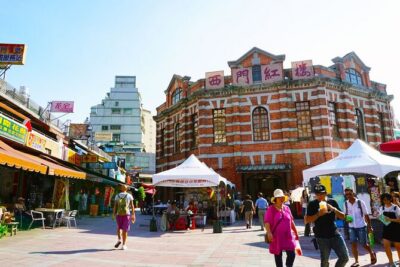
Taipei Old Town – Taiwan Introduction Walking Tour (Tip-Based)
Read our review →![[Private Tour] Shilin Night Market Walking Tour With a Private Tour Guide (2-hr)](https://pic4.discoveringtaiwan.com/wp-content/uploads/private-tour-shilin-night-market-walking-tour-with-a-private-tour-guide-2-hr-400x267.jpg)
[Private Tour] Shilin Night Market Walking Tour With a Private Tour Guide (2-hr)
Read our review →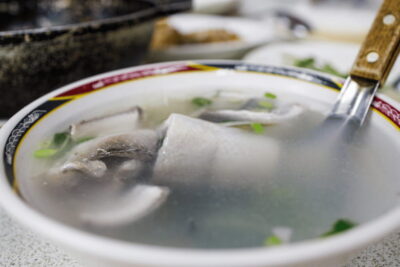
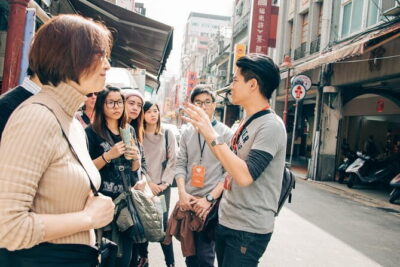
Vintage Taipei – Best of Taiwan & Sunset Walking Tour (Tip-based)
Read our review →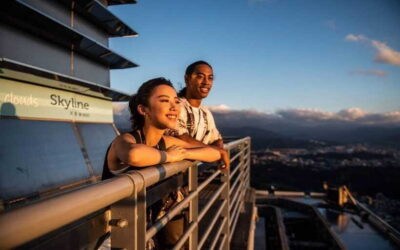
Taipei’s Origin & Longshan Temple – Taiwan Cultural Walking Tour
Read our review →
Private Keelung Cultural Walk: Markets, Streets & Local Life
Read our review →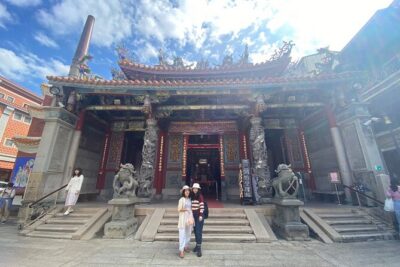
Browse the lists this tour appears in