
Reviewed · MUSEUMS
Taipei: National Palace & Shung Ye Aborigines Museums Ticket
The National Palace Museum holds thousands of years of Chinese art, but its most famous pieces are small enough to miss if you rush: the Jadeite Cabbage and Meat-Shaped Stone reward a patient look. Across town, or as part of the same museum visit, the Shung Ye Museum gives Taiwan’s Indigenous peoples their own focus, with clothing, tools, ritual objects, and multimedia displays.
I like the way this ticket pairs two very different parts of Taiwan’s past. I also like the low price, $12 per person, and the simple entry process, which can involve scanning a QR code at the door. The main drawback is scale: the National Palace Museum can feel overwhelming, while the Shung Ye Museum is small and may take only about 30 minutes.
Key points to know before you go
- Two museums, two views of Taiwan: Compare imperial Chinese art with the traditions of Taiwan’s 14 recognized Indigenous tribes.
- Famous small treasures: Look for the Jadeite Cabbage and Meat-Shaped Stone among the National Palace Museum’s vast holdings.
- A $12 cultural bargain: One ticket covers admission to both museums and their permanent and special exhibits.
- Self-guided by design: No guide, hotel transfer, food, or drinks are included, so you set your own pace.
- Allow time for the main museum: The collection spans more than 5,000 years, and a quick pass will show only a fraction of it.
- The second museum is compact: Shung Ye is useful and focused, but it is not a second National Palace Museum in size.
Why these two Taipei museums work well together
Taipei’s museum story is often told through the National Palace Museum alone. That would give you an impressive view of Chinese court art, calligraphy, bronzes, ceramics, and carved objects, but it would leave out a major part of Taiwan’s identity.
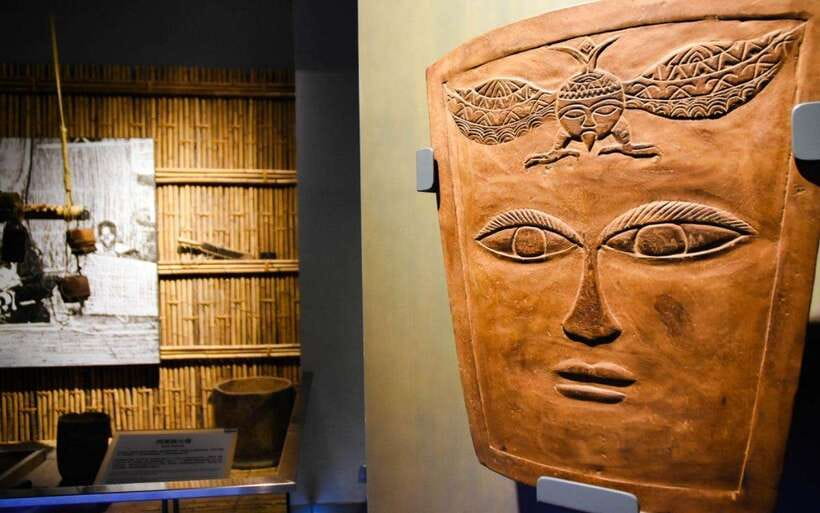
The Shung Ye Museum of Formosan Aborigines supplies that missing counterpoint. Its collections focus on the island’s Indigenous peoples, with displays on traditional clothing, hunting tools, handicrafts, ceremonial items, and daily life. The result is not a single story of Taiwan, but two very different cultural chapters presented in one outing.
I find that contrast useful. At the National Palace Museum, you see objects linked to long Chinese dynastic traditions and elite artistic practices. At Shung Ye, you encounter the cultures of communities whose histories developed on Taiwan and whose languages, customs, and material arts are distinct from those of imperial China.
The museums also differ in mood. The National Palace Museum is broad, formal, and packed with objects. Shung Ye is narrower in scope and more direct. You can spend hours at the first museum and still leave portions unseen, then use the second for a shorter, more concentrated look at Indigenous culture.
A few more Taipei trips worth a look
- Taipei: National Palace Museum E-Ticket
★ 4.4 · 273 reviews - Taipei City Morning Tour with National Palace Museum entry
★ 4.0 · 232 reviews - Taipei: Morning City Tour with National Palace Museum Entry
★ 4.6 · 173 reviews
Starting with 5,000 years of Chinese art
The National Palace Museum is the main event for most people buying this ticket. Its collection covers more than 5,000 years of Chinese history, with objects connected to past dynasties and many areas of artistic life.
You can expect bronze ritual vessels, calligraphy scrolls, carved jade, ceramics, paintings, and other works of art. The range matters because it lets you compare changing styles and uses across long periods rather than viewing one isolated type of object.
The museum’s size can be both its strength and its problem. There is enough here for an unhurried visit, but the number of objects can wear you down. I recommend choosing a few sections or themes instead of trying to inspect every case. A visitor who races through every room may remember the famous cabbage but little else.
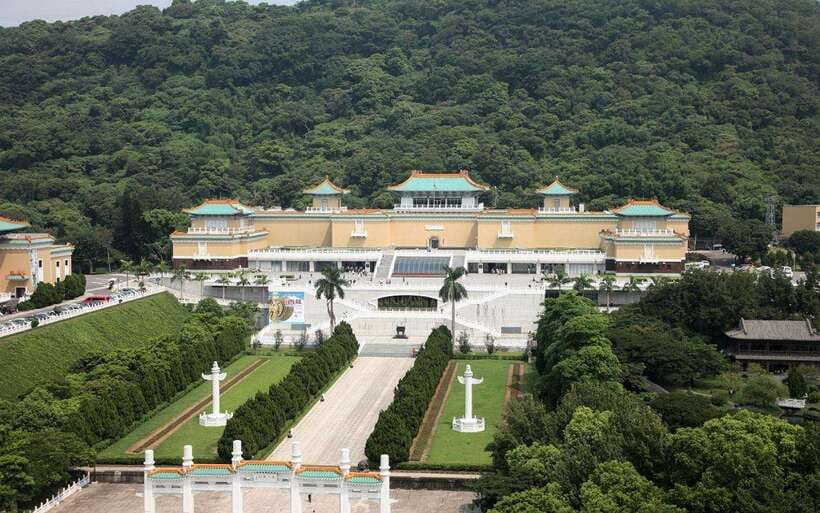
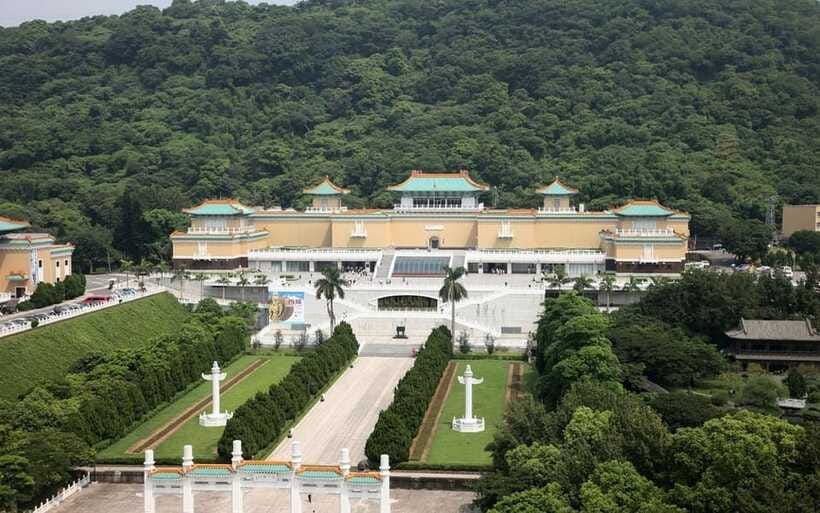
The building’s hillside setting also adds to the visit. The museum is described as a major landmark set on a spectacular hillside, so the setting is part of the experience rather than an afterthought. You are not simply walking into a small city gallery and finishing in an hour.
The Jadeite Cabbage and Meat-Shaped Stone
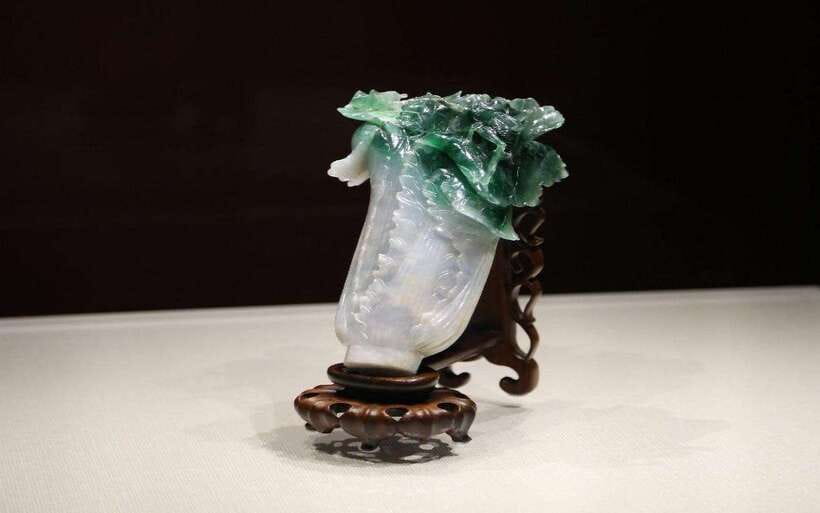
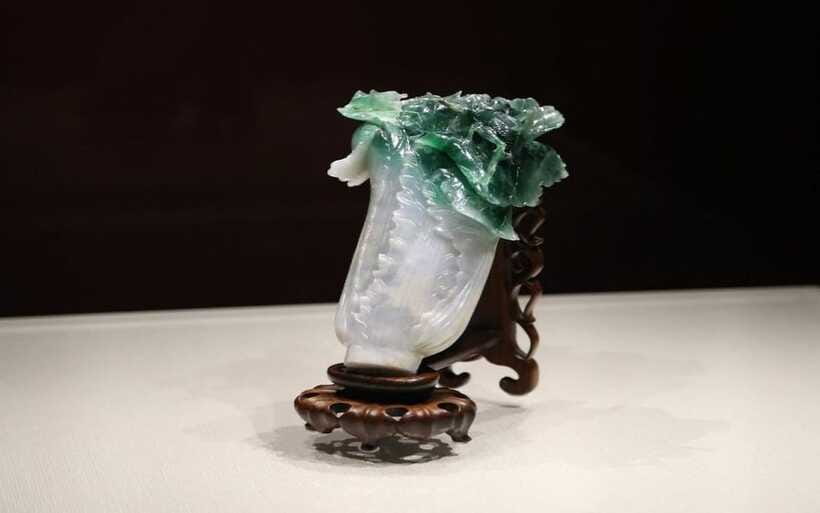
The Jadeite Cabbage is the National Palace Museum’s best-known object, and it is easy to understand why. A piece of jade has been carved to resemble a cabbage, with careful attention to its form and color. The work is much smaller than some first-time visitors expect, so take a moment to look closely rather than assuming the display will dominate the room.
The Meat-Shaped Stone is another famous stop. Its appearance makes it memorable because the carved stone resembles a piece of cooked pork. These two objects show a playful side of Chinese craftsmanship: the subject matter is familiar, but the skill lies in making hard material look like something from everyday life.
You should not treat these objects as the whole point of the museum. They are useful anchors, especially when the collection feels large, but the bronze vessels, calligraphy, ceramics, and other works explain the wider artistic story.
If you want help deciding what deserves your attention, an audio guide can be valuable. It helps you focus on major objects and understand why they matter, rather than moving from case to case with no context. Multilingual staff are available to help with practical questions, and the entry process is intended to be simple.
Looking beyond the famous objects
The museum’s larger value is the chance to see how art and culture changed over thousands of years. A bronze ritual vessel can tell you about ceremony and authority. A calligraphy scroll shows how writing could also be treated as a high art. A carved jade piece reveals the patience and precision expected from court workshops.
You might find that some rooms appeal to you more than others. If calligraphy is not your interest, move on. If you enjoy close detail, spend longer with jade, carved objects, and ceramics. The ticket gives you a full day of validity, so you do not need to view the collection as one exhausting sweep.
Permanent and special exhibits are included. The exact mix can change, so check what is showing when you plan your visit. The ticket itself does not include a guided tour, so you will need to read the displays, use an audio guide if available, or explore independently.
Food and drinks are not allowed inside exhibit areas. Plan to step away from the galleries when you need a break. Flash photography is also prohibited, which protects the objects and means you should be ready to view them without using a camera flash.
Same island, a completely different kind of day:
- From Taipei: Shifen, Jiufen, and Yehliu Guided Day Trip
★ 4.6 · 1,654 reviews - Full-Day Private Custom Taipei City Tour
★ 5.0 · 911 reviews - From Taipei: Yehliu, Jiufen, and Pingxi Day Tour
★ 4.7 · 892 reviews - Taipei: Jiufen Night View and Shifen Day Tour
★ 4.6 · 870 reviews
A shorter visit at Shung Ye Museum
The Shung Ye Museum of Formosan Aborigines is much smaller than the National Palace Museum. That is not a flaw if you plan for it. It gives you a focused introduction to Taiwan’s 14 recognized Indigenous tribes rather than attempting to cover every part of their history in a huge building.
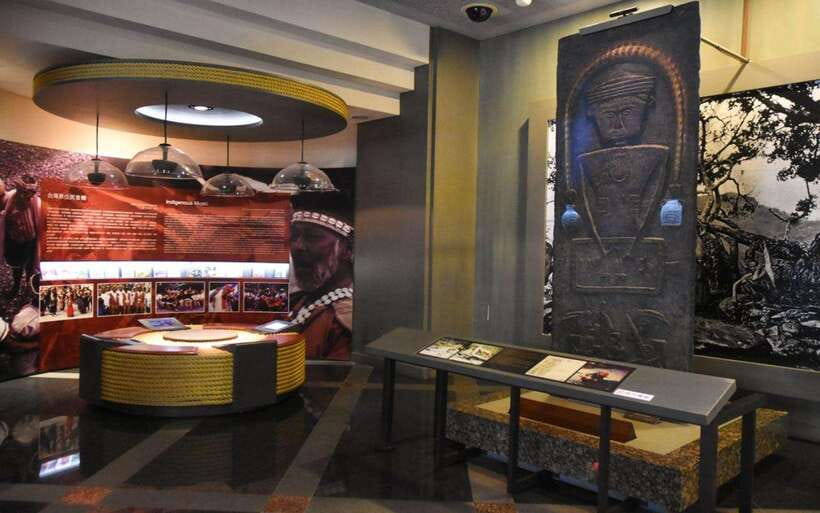
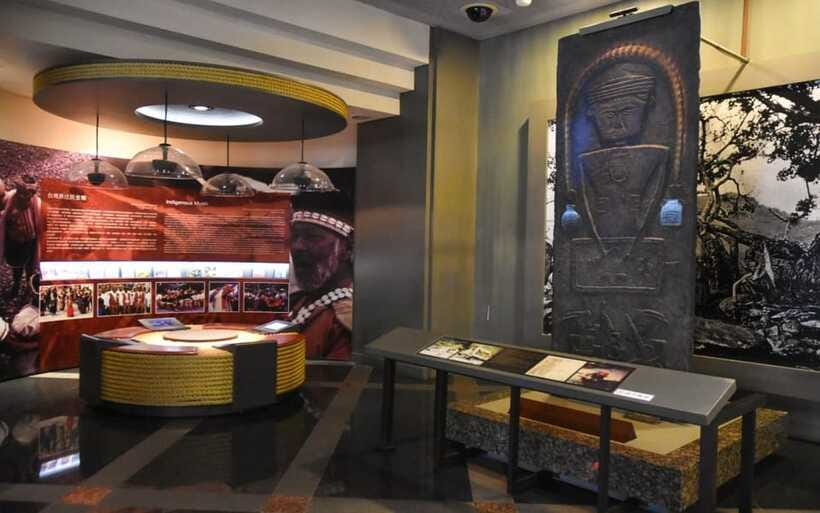
Displays include traditional clothing, hunting tools, handicrafts, and ceremonial artifacts. These objects give you a practical sense of how culture appears in material form. Clothing can show identity and craft. Hunting tools point to daily needs and local skills. Ceremonial objects offer a window into traditions that are not meant to be reduced to decoration.
The museum also uses multimedia displays to explain Indigenous traditions and lifestyles. These can help connect the objects to the people who made and used them. Without that context, a collection of tools or garments can seem like a set of disconnected items. Here, you get more help in understanding how they fit into community life.
The museum’s small size means you may finish in around 30 minutes. I would not see that as a reason to skip it. Its purpose is different from the National Palace Museum’s. Shung Ye provides an important correction to a museum day focused only on imperial collections, even if it does not require half a day.
Why the Indigenous collection matters
Taiwan’s Indigenous communities have faced severe pressure from colonialism and later occupations. A visit to Shung Ye gives you a place to consider those experiences alongside the art and objects themselves.
The museum’s focus on 14 recognized tribes also makes clear that Indigenous Taiwan is not one single culture. Differences in language, clothing, tools, and ceremony matter. You will not learn every detail in a short visit, but you can leave with a better sense of the island’s ethnic and cultural range.
I especially value the pairing because it keeps the Indigenous story from being treated as a footnote. You first see the grand imperial collection, then encounter the cultures of the people whose communities belong to Taiwan itself. The two museums do not tell the same kind of story, and that is exactly why the combination works.
Keep your expectations realistic. Shung Ye is modest and narrow in scope. If you want a large number of galleries or an all-day museum experience, it may feel brief. If you want a clear introduction before exploring more of Taiwan, it earns its place.
How to plan your one-day ticket
The pass is valid for one day and includes admission to both museums. It is not a guided tour, so you choose the order, pace, and amount of time spent at each site.
A practical plan is to give the National Palace Museum most of your time, then visit Shung Ye while your interest in Taiwan’s cultural story is still fresh. You can also start at Shung Ye if you prefer a short introduction before facing the larger collection. The supplied ticket information does not include hotel pickup, drop-off, or transport between the museums, so you must arrange your own way there.
The ticket includes permanent and special exhibits, but it does not include food or drinks. You will also need to follow museum rules, including no flash photography and no food or beverages in exhibit areas.
The ticket is advertised with skip-the-ticket-line access. At the entrance, keep your booking information ready. A QR code may be scanned at the door, making entry quick and straightforward.
The stated price is $12 per person. For two museums and a full day of validity, I consider that strong value, especially if you plan to spend several hours at the National Palace Museum. The value is less obvious if you only want to see the cabbage, take a quick look around, and leave. In that case, the admission remains inexpensive, but your time is doing more of the work than the ticket.
Free cancellation up to 24 hours before the activity and reserve-now, pay-later booking add useful flexibility. Check availability for the current starting times, since the pass is tied to a one-day visit.
Accessibility and comfort notes
Wheelchair accessibility is limited, and the activity is listed as unsuitable for wheelchair users. If you need full step-free access or mobility support, confirm the current conditions before booking.
The museums also require a quiet, careful style of visiting. You cannot bring food or drinks into exhibit areas, and flash photography is not allowed. Those rules are easy to follow, but they matter if you are planning a family day around snacks or hoping to photograph every object.
Because there is no guide included, you should be comfortable reading displays and making your own route. An audio guide is worth considering at the National Palace Museum, particularly if the collection’s size feels intimidating. It can help you choose key pieces instead of wandering without a plan.
Who will get the most from this ticket?
I would recommend this experience to anyone interested in art, archaeology, Chinese history, or Taiwan’s Indigenous cultures. It is also a good choice if you want a flexible museum day rather than a fixed tour with a guide and group schedule.
Families and mixed-interest groups may appreciate the variety. One person can focus on jade and calligraphy, another on bronzes or ceramics, and everyone can finish with a shorter visit centered on Taiwan’s Indigenous peoples.
The ticket is less suitable if you dislike large museums or prefer a fast, highly guided outing. The National Palace Museum demands choices. Without an audio guide or a plan, you may feel buried under the number of objects.
It is also not the right fit for wheelchair users given the stated accessibility limits. And if your schedule is tight, remember that the combination is best treated as a full museum day, not a quick pair of stops.
Should you book the National Palace and Shung Ye ticket?
Book it if you want two contrasting views of Taiwan for $12 and can give the National Palace Museum several unhurried hours. The Jadeite Cabbage and Meat-Shaped Stone are fun targets, but the greater reward is seeing them alongside bronzes, calligraphy, ceramics, and other works spanning 5,000 years.
Add Shung Ye because it keeps your museum day from becoming only a story about imperial China. Its 30-minute scale may feel modest, yet the clothing, tools, ceremonial objects, handicrafts, and multimedia displays provide a useful introduction to Taiwan’s 14 Indigenous tribes.
Skip it if you need a fully guided tour, hotel transport, or reliable wheelchair access. For everyone else, this is an inexpensive, flexible way to connect Taiwan’s imperial artistic heritage with the Indigenous cultures that remain central to the island’s identity.
FAQ
What does the Taipei museum ticket include?
It includes admission to the National Palace Museum and the Shung Ye Museum of Formosan Aborigines, along with access to permanent and special exhibits.
How much does the ticket cost?
The listed price is $12 per person.
How long is the ticket valid?
The ticket is valid for one day.
Is a guided tour included?
No. Guided tours are not included, so you explore the museums independently.
Does the ticket include an audio guide?
The ticket information does not list an audio guide as included. An audio guide is recommended as an optional way to focus on key National Palace Museum exhibits.
Are food and drinks included?
No. Food and drinks are not included, and they are not allowed inside the exhibit areas.
Can I take photographs inside the museums?
Flash photography is not allowed inside the museums.
Is transportation included?
No. Hotel pickup, hotel drop-off, and transportation are not included.
Can wheelchair users take this activity?
Wheelchair accessibility is limited, and the activity is listed as unsuitable for wheelchair users.
Can I cancel the booking?
Yes. You can cancel up to 24 hours in advance for a full refund. Reserve-now, pay-later booking is also available.
Just added around Taipei
- Keelung: Heping Island Geopark Entry Ticket★ 5.0 · 3 reviews
- Best of Taiwan 9 Days Tour★ 3.5 · 3 reviews
- Iconic Food Tour: Local Street Food, Drinks & Sites★ 4.4 · 3 reviews
- Keelung Shore Excursion: Private 6H Natural Wonder & Seafood Tour★ 5.0 · 3 reviews
- One-way Private Transfer between Jiufen and Taipei★ 5.0 · 3 reviews
- Private Taichung Instagram Day Tour from Taipei★ 5.0 · 3 reviews
- Full Day Private History Tour in Taipei City★ 4.5 · 3 reviews
- From Taipei: Private Classic Taipei Timeless Treasures Tour★ 5.0 · 3 reviews
Museums, compared.
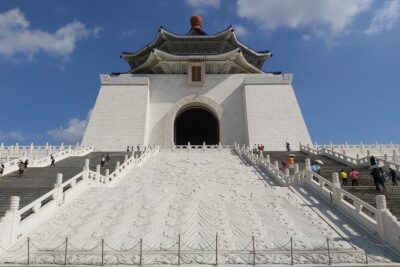
Taipei City Morning Tour with National Palace Museum entry
Read our review →
Kaohsiung: Private City Tour with Fo Guang Shan Museum
Read our review →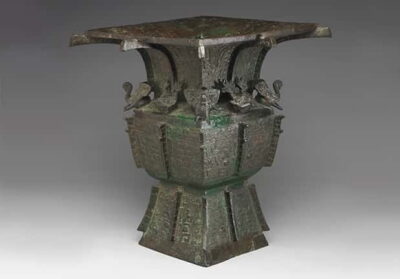
National Palace Museum and Taiwan Aborigines Museum
Read our review →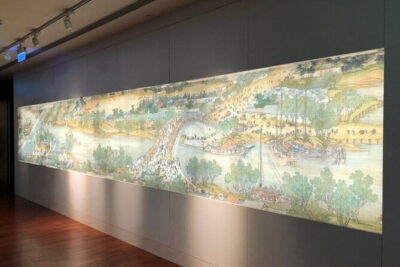
From Taipei: Thousand-Island Lake & Tea Museum Private Tour
Read our review →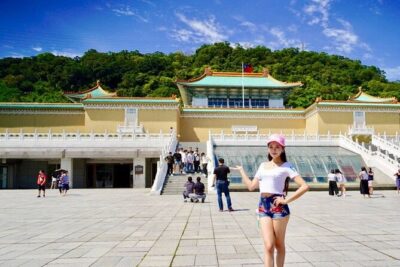
National Palace Museum Northern Branch Taiwan Admission
Read our review →Browse the lists this tour appears in