
Reviewed · WALKING TOURS
Taipei: Old Town Walking Tour
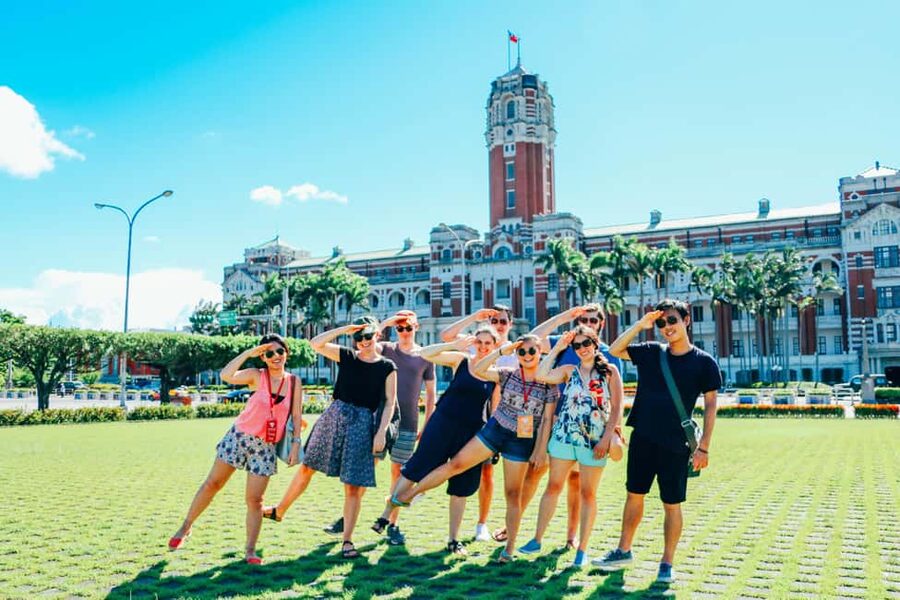
Taipei’s old town is where Taiwan’s past feels closest to the street. In 2.5 hours, you move from the National Taiwan Museum and 228 Peace Memorial Park to the Presidential Office, Zhongshan Hall, and the red-brick Red House. This is a history walk first, with shopping streets at the finish.
I like the clear route and the chance to connect major sights rather than see them as isolated photo stops. I also like the strong focus on Taiwan’s difficult modern history, especially the 228 tragedy. The main consideration is pace: you cover several districts and landmarks on foot, and the listed $1.10 price is unusually low, so confirm the current rate and tour details before booking.
Key points at a glance
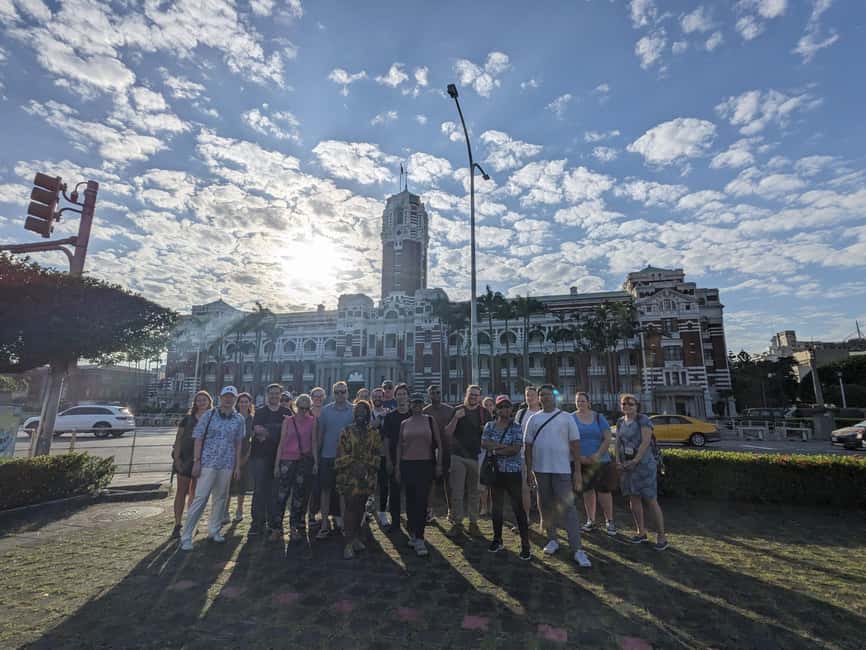
- A compact old-town route: Cover the National Taiwan Museum, 228 Peace Memorial Park, Presidential Office, Zhongshan Hall, and Ximending in 2.5 hours.
- History beyond sightseeing: Learn how the 228 tragedy and other events shaped modern Taiwan.
- A memorable final stop: See the octagonal Red House, once Taipei’s first public market.
- English-language guidance: Guides such as Leo, Vincent, and Ale are praised for clear, lively explanations and an easy style.
- Simple public-transit meeting point: Begin at Taipei Metro NTU Hospital Station Exit 4, at street level.
- Flexible booking: Cancellation is free up to 24 hours ahead, and you can reserve now and pay later.
Why Taipei’s old town works so well on foot

Taipei can feel modern at first glance, with its metro system, towers, shopping streets, and polished public spaces. This walk shows you the older civic core beneath that surface. The route links buildings, parks, and markets that tell a connected story of government, public life, political trauma, and popular entertainment.
You meet your English-speaking guide at NTU Hospital Station Exit 4, street level. That is a practical starting point because you do not need to search for a hotel lobby or a small shop. Still, arrive with the station name and exit number ready on your phone. Taipei has many large metro stations, and a wrong exit can put you on the wrong side of a busy road.
The tour lasts about 2.5 hours. That is long enough for a useful introduction without taking up your whole day. You should expect a walking-focused experience rather than extended visits inside every building. The details provided describe stops and explanations, but not admission to the museums or interiors of the landmarks, so ask before booking if entering a particular site matters to you.
A few more Taipei trips worth a look
- Taipei Historic Shared Walking Tour
★ 5.0 · 189 reviews - Taipei Old Town – Taiwan Introduction Walking Tour (Tip-Based)
★ 5.0 · 175 reviews - [Private Tour] Shilin Night Market Walking Tour With a Private Tour Guide (2-hr)
★ 5.0 · 123 reviews
The National Taiwan Museum begins the story
The first major stop is the National Taiwan Museum, one of the old town’s key cultural landmarks. You stop here for a while before continuing through the district. Even without a long museum visit, this pause gives the guide a natural place to explain Taiwan’s past and set up the rest of the route.
I like this opening because it starts with context instead of rushing straight to a shopping street. Taiwan’s story includes layers of political rule, social change, and cultural identity. A guide can help you see why government buildings, memorial parks, and public halls matter, rather than treating them as attractive old facades.
The museum stop is also a useful test of the tour’s pace. If you want a slow museum visit with time for exhibits, this walk may feel too quick. If you want an orientation to Taipei’s old center, the short stop should fit well.
228 Peace Memorial Park brings difficult history into view
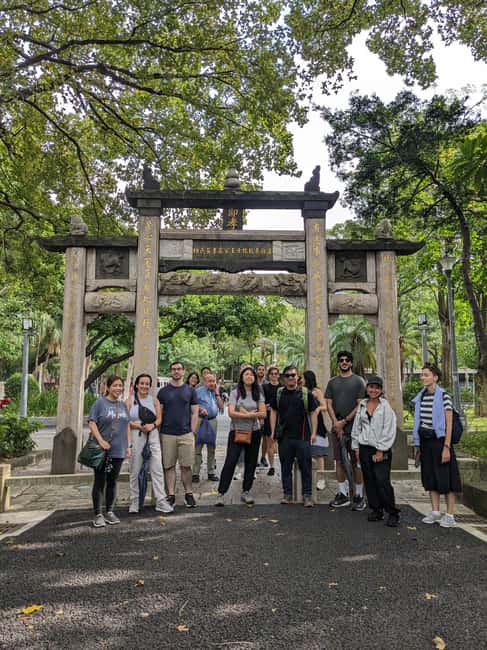
From the museum, the route passes through 228 Peace Memorial Park. This is one of the most important parts of the walk because the guide explains the 228 tragedy, a painful event in Taiwan’s modern history.
The value here is not just learning a date or memorizing a political term. The explanation helps you understand why Taiwan’s public memory can feel complicated, and why modern discussions of identity and government carry such weight. The tour presents this subject while you are standing in a real civic space, not simply hearing a lecture in a classroom.
This stop may feel more serious than the later markets and shopping streets. That contrast is useful. Taipei’s old town is not only a collection of pretty buildings and snack shops. It also contains places connected to loss, public mourning, and political change.
You may want to ask questions here. Several strong comments about the guides point to their ability to explain Taiwanese history clearly and respond to discussion. Ale, for example, is praised for giving an entertaining, concise account while making people comfortable enough to ask questions. That relaxed style helps with a subject that could otherwise feel distant or overly formal.
The Presidential Office shows Taipei’s civic side
The walk then passes the Presidential Office, known for its architecture. This stop gives you a look at the physical center of Taiwan’s government and adds an important civic layer to the tour.
The building is best understood as part of the route’s larger story. You have just heard about public trauma and memorial memory. Now you see the government setting connected to Taiwan’s political life. The guide’s explanation can help tie the building to the changing city around it.
Do not book this tour expecting a formal government-building visit unless that is specifically confirmed. The description says you pass by and see the architecture. That makes the stop worthwhile for orientation and photographs, but it is not the same as an interior tour.
Same island, a completely different kind of day:
- From Taipei: Shifen, Jiufen, and Yehliu Guided Day Trip
★ 4.6 · 1,654 reviews - Full-Day Private Custom Taipei City Tour
★ 5.0 · 911 reviews - From Taipei: Yehliu, Jiufen, and Pingxi Day Tour
★ 4.7 · 892 reviews - Taipei: Jiufen Night View and Shifen Day Tour
★ 4.6 · 870 reviews
Markets add everyday Taipei to the route
After the government district, you head toward city markets, where stalls sell souvenirs and other goods. This shift from official buildings to street commerce makes the walk feel more grounded. You get a glimpse of how the old town functions as a place for ordinary shopping, not only a collection of historic markers.
I like having this part in the middle of the itinerary. It breaks up the heavier historical material and gives you a chance to watch Taipei’s daily rhythm. You might find something useful to take home, but the point is less about shopping than seeing how commerce fits into the old district.
Keep your expectations sensible. This is not a dedicated food tour or a long market crawl. If your main goal is Taiwanese snacks, breakfast, or night-market eating, one of the city’s food tours would suit you better. Here, the markets are one chapter in a broader old-town walk.
Zhongshan Hall connects public life with history
The next landmark is Zhongshan Hall, a historic building that once served as a public auditorium. This is a particularly good stop for understanding how Taipei’s public life developed. A hall built for civic gatherings says something about the city’s need for shared spaces, ceremonies, and public events.
The route works well because Zhongshan Hall is not presented alone. By this point, you have seen the museum, park, government architecture, and markets. The hall becomes another piece of the same urban story.
The description does not promise entry into Zhongshan Hall, so plan on seeing the building from the outside unless your guide says otherwise. Even as an exterior stop, it helps you notice the contrast between old civic architecture and the commercial streets ahead.
The strongest praise for this experience focuses on the guides’ ability to make facts stick. Iain describes the history as factual and very informative, while also praising a guide’s remarkable memory. That matters on a route with several names, dates, and political events. A good guide keeps the information connected to what you can see.
Ximending changes the mood
The walk continues into Ximending, Taipei’s famous shopping district. The area shifts the mood again, moving from formal public buildings into a lively retail and entertainment zone.
This is a smart ending for a short tour. You finish in a district where you can continue on your own after the guide says goodbye. You might browse shops, look for souvenirs, or simply use the metro to reach another part of the city. The tour does not leave you in an isolated historic site with no easy next step.
At the same time, Ximending can be a lot to take in after a history-heavy walk. The district’s energy is part of its appeal, but it may feel less calm than the earlier parks and civic spaces. If you prefer quiet temples or traditional neighborhoods, a tour focused on Longshan Temple and Taipei’s origins would give you a different mood.
The Red House makes a strong finish
The final stop is the Red House, a red-brick Western-style building shaped like an octagon. It was Taipei’s first public market, and its unusual design makes it easy to recognize.
This is more than a colorful photo stop. The Red House links the old market economy with modern Ximending. You have just walked through present-day shopping streets, and now you see a building tied to the area’s earlier commercial life. That gives the ending a satisfying sense of place.
The Red House also helps explain how Taipei changes without losing every trace of its past. The building remains part of a busy district rather than being sealed away as a remote monument. You can see history and current city life in the same short stretch.
The guides shape the experience
The guide is the most important variable on a history walk. The activity is offered in English, and the available feedback points to several guides by name: Leo, Vincent, and Ale. Leo is described as passionate, informative, and energetic. Vincent is called a perfect guide, while Ale is praised for a free and easy approach that encourages questions.
You should expect more than a list of dates if the tour follows that pattern. The guide explains the 228 tragedy, adds cultural context, and connects what you see to the way Taiwan became the country it is today. That is especially useful if this is your first visit and you do not yet know how the major historical periods fit together.
The tour also appears suitable for people who are not native English speakers. One Portuguese-speaking participant found the explanation easy to follow. Still, the official language is English, so you should be comfortable listening to an English walking tour for 2.5 hours.
A private group is available. That option may be worth considering if you want more time for questions, prefer a slower rhythm, or are traveling with family and friends. The standard group format may be better value for a solo visitor or couple, particularly at the listed low price.
Price, pace, and practical value
The listed cost is $1.10 per person, which is remarkably low for a guided city walk. At that price, the tour offers excellent potential value if the current price is accurate and the booking terms remain the same.
I would verify the price before making plans. The figure may reflect a promotional rate, a starting price, or a display issue. The meeting location is clearly in Taipei, while the supplied location line says Nantou County, so I would also confirm the correct city and meeting details directly during booking. The route itself is clearly centered on Taipei’s Ximen and Ximending districts.
You receive the most value if you use the walk as an introduction, then return to one or two places later. The 2.5-hour schedule cannot give you a full museum visit, extended shopping time, or a detailed look inside every landmark. Its strength is the sequence and the explanation.
The route is listed as wheelchair accessible. That is helpful, but the provided information does not describe surface conditions, curb cuts, restroom access, or the exact walking distance. If you use a wheelchair, contact the provider before booking so you can confirm that the day’s route fits your needs.
Free cancellation up to 24 hours ahead and reserve-now, pay-later booking make this easy to fit into a changing schedule. Starting times vary, so check availability for the date you want.
Who should book this walk
I would choose this tour for a first visit to Taipei, especially if you want history before food and shopping take over your schedule. It suits curious adults, older children who can handle a 2.5-hour walk, and anyone who wants a guide to explain Taiwan’s political past in plain English.
It is also useful early in a trip. After seeing the museum, memorial park, government district, Zhongshan Hall, and Red House, you will have a better map of central Taipei and a clearer idea of where to spend your free time.
I would choose another activity if you want a food-first experience, a long visit to Taipei 101, a day trip to Jiufen and Shifen, or a temple-centered look at the city. This walk does not promise tastings, major observation-deck views, countryside scenery, or long interior visits.
Wear comfortable shoes and leave room in your schedule after the tour for Ximending. The route ends in a useful part of the city, so you can continue exploring instead of losing time getting back to your hotel.
Should you book the Taipei old-town walk?
Book it if you want a short, low-cost introduction to Taipei’s history and prefer seeing the city on foot. The route is well chosen, the 228 Memorial Park gives the walk real substance, and the Red House provides a memorable finish in Ximending.
The main caveats are the walking pace, the likely exterior focus at several landmarks, and the need to verify the unusual $1.10 price and Taipei versus Nantou location detail. If those points work for your plans, this is a practical first-day activity, with guides such as Leo, Vincent, and Ale adding the personal explanation that turns buildings into a story.
FAQ
Where does the Taipei old-town walking tour meet?
The meeting point is Taipei Metro NTU Hospital Station Exit 4, at street level.
How long does the tour last?
The walking tour lasts 2.5 hours.
What language is the tour conducted in?
The live tour guide speaks English.
Is the tour wheelchair accessible?
Yes, the activity is listed as wheelchair accessible.
Is a private group option available?
Yes, a private group is available.
Which landmarks are included?
The route includes the National Taiwan Museum, 228 Peace Memorial Park, the Presidential Office, Zhongshan Hall, Ximending, and the Red House.
Does the tour explain the 228 tragedy?
Yes, the guide explains the 228 tragedy during the stop at 228 Peace Memorial Park.
Where does the tour finish?
The tour finishes at the Red House in Ximending.
Can I cancel for a full refund?
Yes, you can cancel up to 24 hours in advance for a full refund.
Just added around Taipei
- Iconic Food Tour: Local Street Food, Drinks & Sites★ 4.4 · 3 reviews
- Keelung: Heping Island Geopark Entry Ticket★ 5.0 · 3 reviews
- Best of Taiwan 9 Days Tour★ 3.5 · 3 reviews
- One-way Private Transfer between Jiufen and Taipei★ 5.0 · 3 reviews
- Keelung Shore Excursion: Private 6H Natural Wonder & Seafood Tour★ 5.0 · 3 reviews
- Full Day Private History Tour in Taipei City★ 4.5 · 3 reviews
- Private Taichung Instagram Day Tour from Taipei★ 5.0 · 3 reviews
- From Taipei: Private Classic Taipei Timeless Treasures Tour★ 5.0 · 3 reviews
Walking Tours, compared.
Taipei Old Town – Taiwan Introduction Walking Tour (Tip-Based)
Read our review →![[Private Tour] Shilin Night Market Walking Tour With a Private Tour Guide (2-hr)](https://pic4.discoveringtaiwan.com/wp-content/uploads/private-tour-shilin-night-market-walking-tour-with-a-private-tour-guide-2-hr-400x267.jpg)
[Private Tour] Shilin Night Market Walking Tour With a Private Tour Guide (2-hr)
Read our review →

Vintage Taipei – Best of Taiwan & Sunset Walking Tour (Tip-based)
Read our review →
Taipei’s Origin & Longshan Temple – Taiwan Cultural Walking Tour
Read our review →
Private Keelung Cultural Walk: Markets, Streets & Local Life
Read our review →Browse the lists this tour appears in